
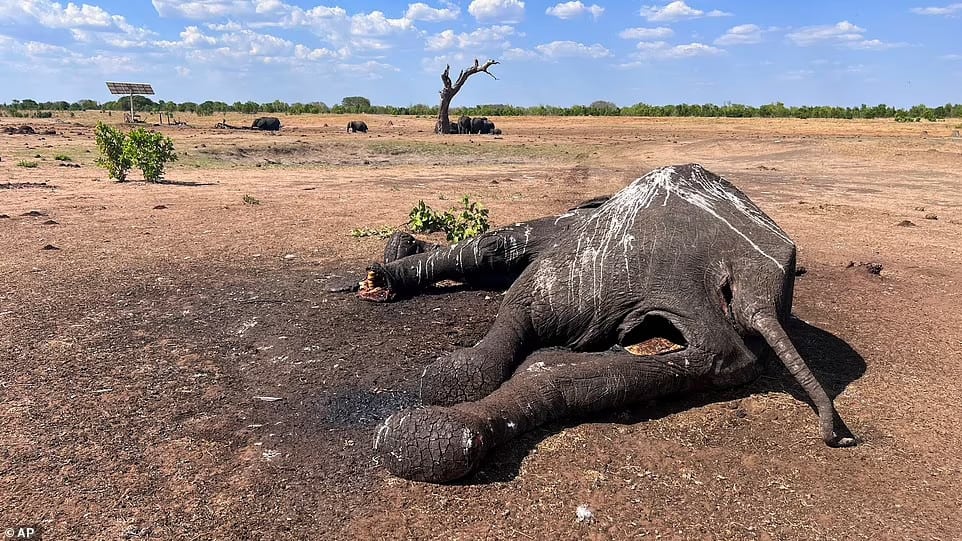
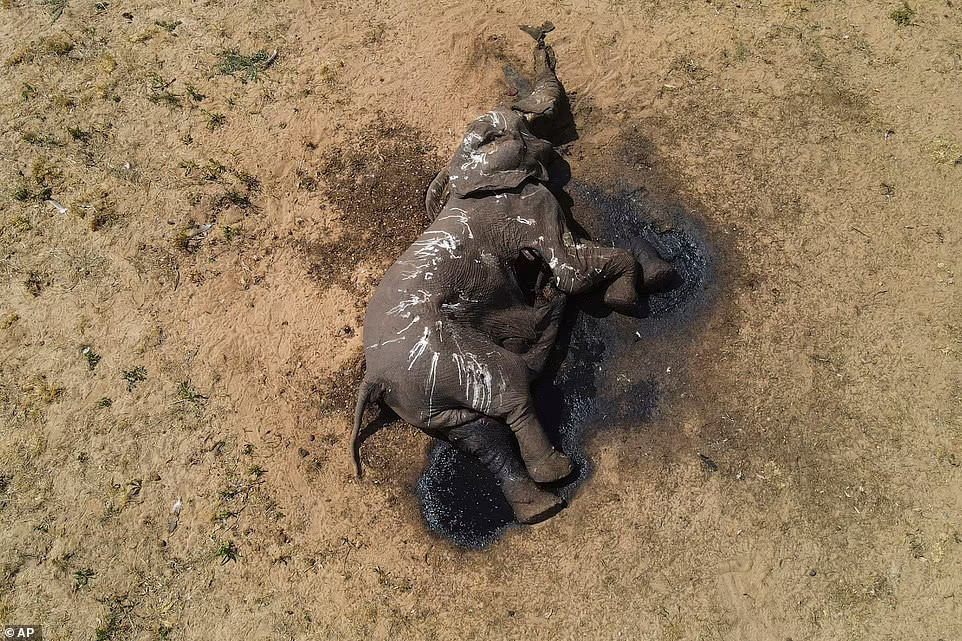
In Zimbabwe’s Hwange National Park, a heartbreaking scene unfolds as over 100 elephants succumb to the harsh realities of a severe drought.
Among the casualties are numerous young calves and older elephants, sounding a dire warning about the devastating impact of climate change on wildlife.
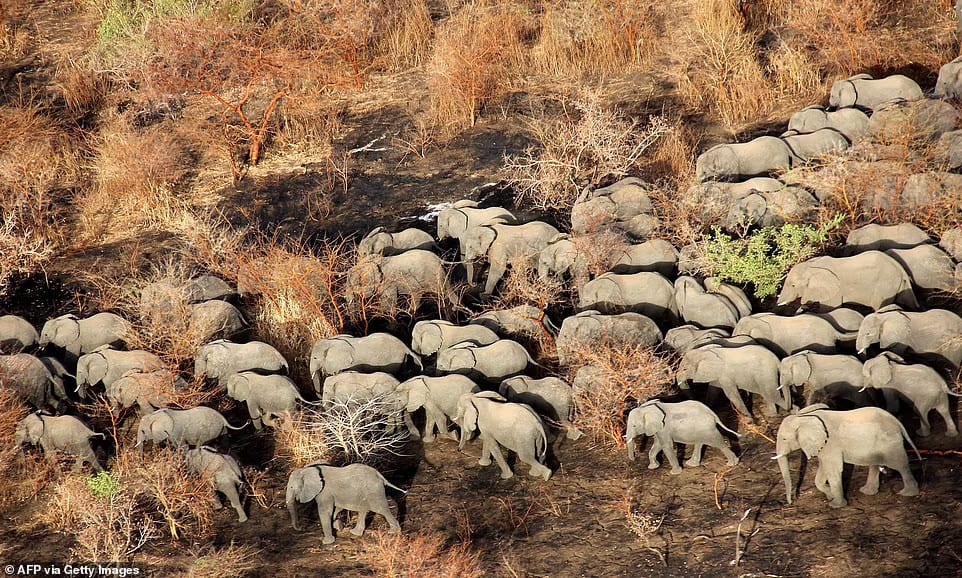
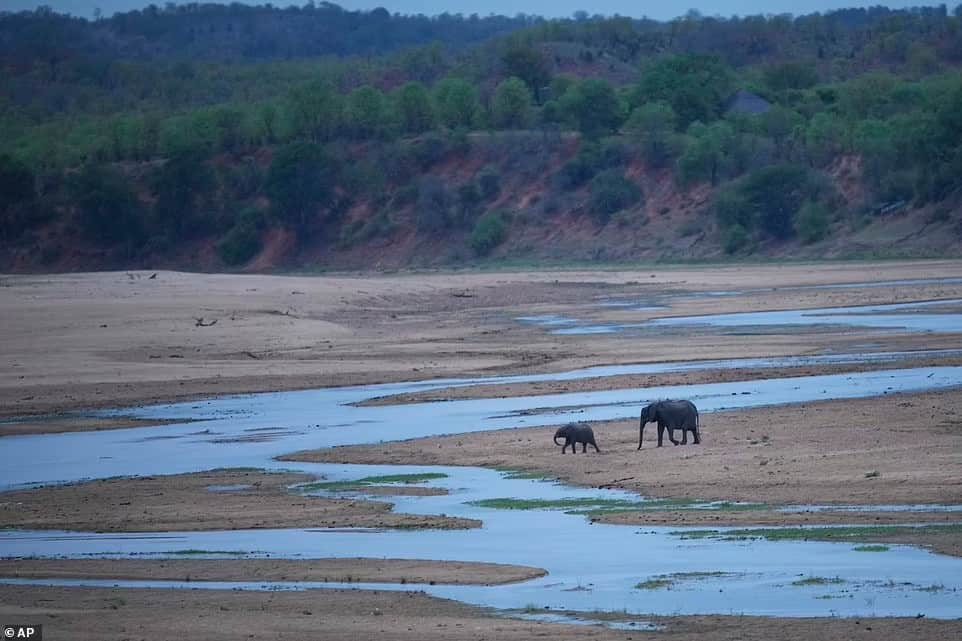
Conservationists are deeply concerned as the prolonged dry spell grips the country’s largest national park, exacerbating the fragile ecosystem.
The El Nino climate pattern exacerbates the situation, which has brought predictions of continued drought and heightened temperatures to Zimbabwe.
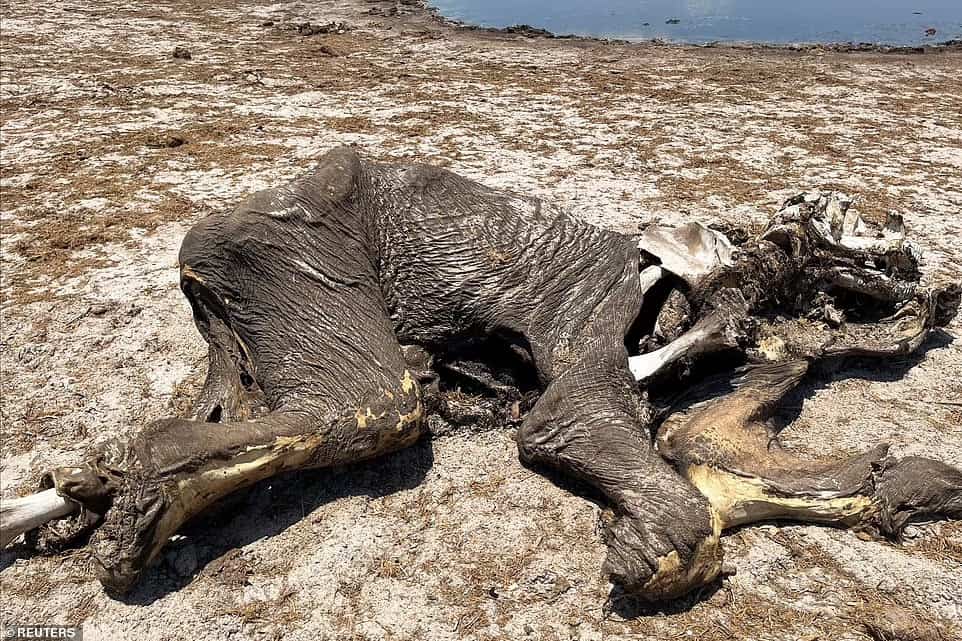
Tinashe Farawo, spokesperson for the Zimbabwe National Parks and Wildlife Management Authority, underscores the severity of the situation, attributing it to the effects of El Nino.
This cyclical weather phenomenon, characterized by the warming parts of the Pacific Ocean, disrupts global weather patterns, leading to adverse conditions in various regions.
Experts fear that the current El Nino event, while causing devastating floods in East Africa, will result in below-average rainfall in southern Africa, further exacerbating the crisis.
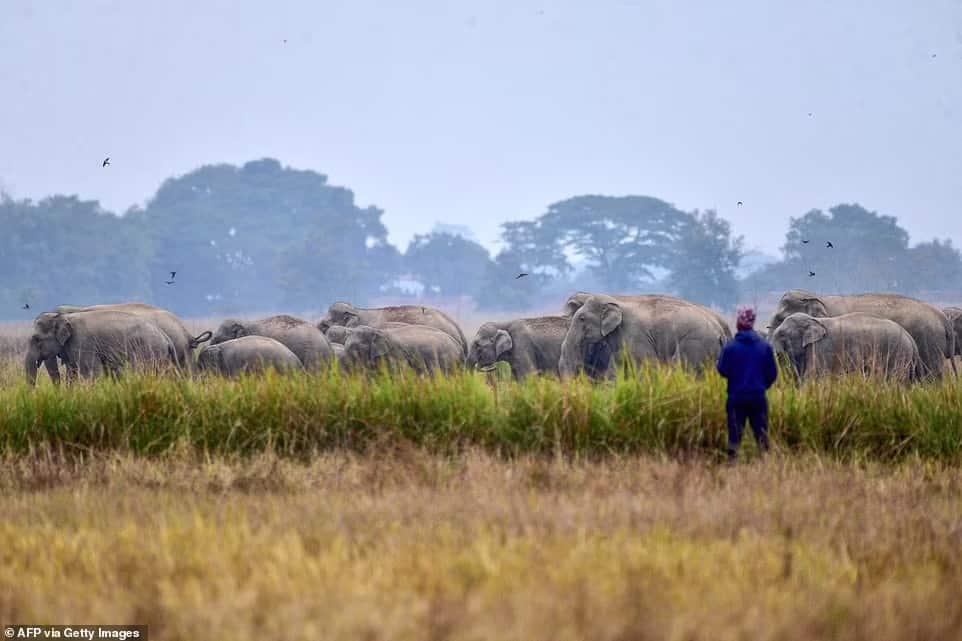
Phillip Kuvawoga, landscape program director at the International Fund for Animal Welfare, emphasizes the vulnerability of wildlife, particularly elephants, to such disruptions in weather patterns.
The delayed rainy season has already taken its toll on Zimbabwe, with forecasts indicating a dry and sweltering summer ahead.
Concerns are mounting among officials, who recall the devastating 2019 drought that claimed the lives of over 200 elephants in Hwange National Park.
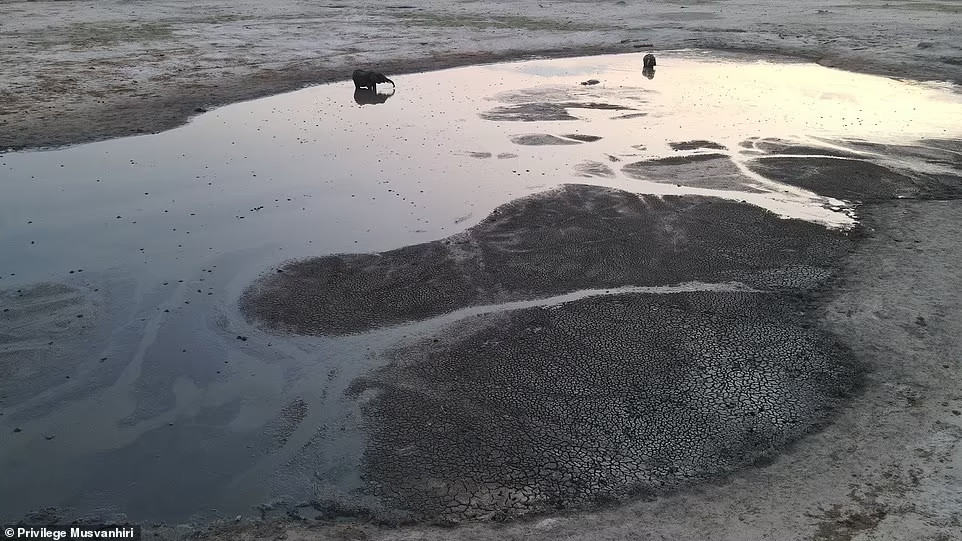
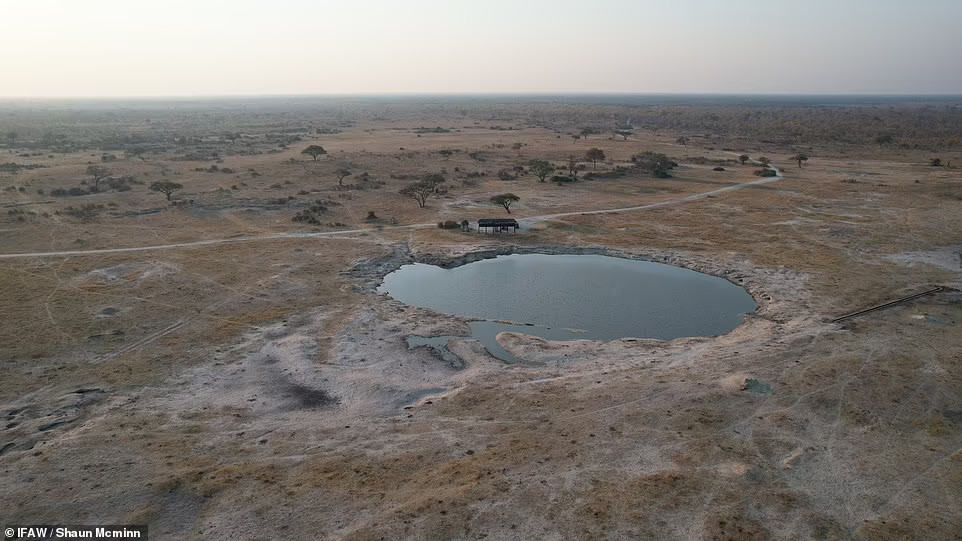
Farawo has taken to social media to raise awareness, sharing a poignant video depicting a young elephant trapped in mud in a partially dried-up water hole.
He emphasizes the plight of vulnerable elephants, including the young, elderly, and sick, who struggle to find water as they cannot roam far distances.
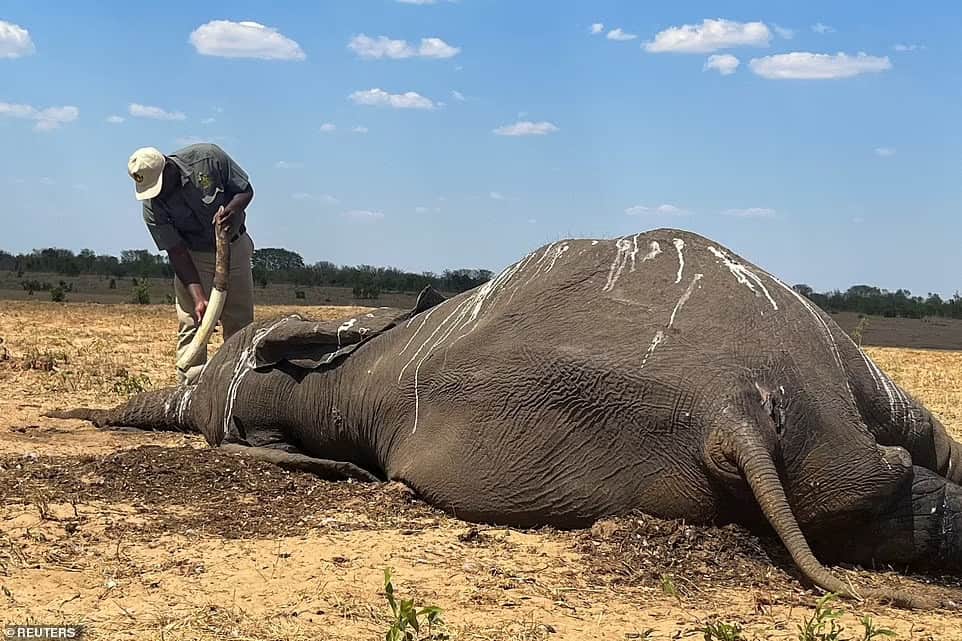
The situation has prompted urgent action, with park rangers removing tusks from deceased elephants to deter poachers.
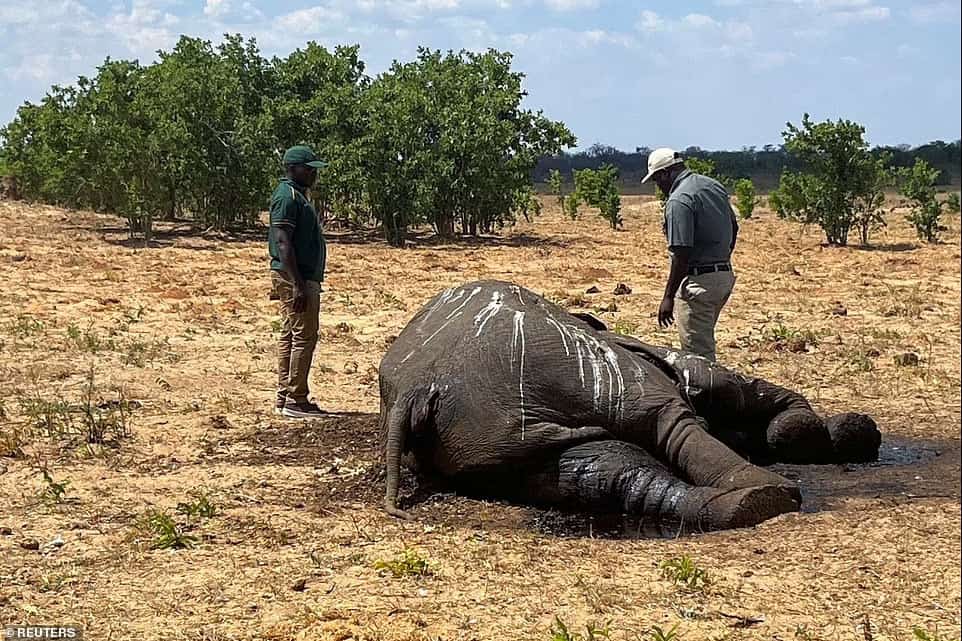
Hwange National Park, home to approximately 45,000 elephants and a diverse array of other wildlife, relies on interventions such as supplying water to waterholes to mitigate the effects of the drought.
Trevor Lane, director of The Bhejane Trust, which supports Zimbabwe’s park authority in conservation efforts, underscores the importance of adapting to the changing climate.
His organization has been instrumental in supplying water to Hwange’s wildlife through a network of boreholes, highlighting the innovative measures taken to safeguard the park’s inhabitants.
Elephants are not just victims of climate change but also crucial allies in combating it. Their role in dispersing seeds and aiding forest regeneration underscores their significance in maintaining ecosystem health and mitigating carbon emissions.
Preserving these majestic creatures is a moral imperative and a vital component of climate resilience efforts.
Read more Elephant News.


