
A photograph of a dead zebra beside a hunter can provoke an immediate reaction. But the conservation and ethical questions behind recreational zebra hunting are more complicated than the claim that zebras are simply “abundant.”
There are three living zebra species, and they do not share the same conservation status. The plains zebra is widespread and numbers more than 500,000 across its range, according to the assessment cited by conservation organizations. Yet it is classified as Near Threatened globally, with declines recorded in many range countries. The mountain zebra is Vulnerable, while Grevy’s zebra is Endangered.
That means any claim about whether “zebras” can sustain hunting must identify the species, population, country and management system involved. Local abundance in one part of southern Africa cannot be used to describe every zebra population across the continent.
Legal hunting is not the same as poaching
Recreational zebra hunting is legal under regulated conditions in some African jurisdictions, particularly for certain populations of plains zebra. Requirements differ by country and province and may include hunting licenses, species permits, quotas, landowner authorization and rules governing the export of trophies.
International trade adds another layer. The Convention on International Trade in Endangered Species of Wild Fauna and Flora, or CITES, places some zebra populations or species under trade controls. A hunt that is legal where it occurs may still require export and import documentation, while illegal killing or trafficking remains a separate wildlife crime.
Those distinctions are essential for factual reporting. A social-media photograph without a confirmed date, location, species and permit history cannot establish that a crime occurred. It can, however, prompt a legitimate public debate about whether an activity should be permitted at all.
The conservation argument—and its limits
Supporters of regulated trophy hunting argue that fees can finance habitat protection, anti-poaching work and community income, creating an economic reason to maintain wildlife on the landscape. IUCN publications acknowledge that carefully managed wildlife use can produce conservation and livelihood benefits in some circumstances.
But the outcome is not automatic. It depends on credible population data, science-based quotas, enforcement, transparent finances and whether meaningful benefits reach local communities. IUCN discussions of trophy hunting have also highlighted evidence that claimed community and conservation benefits may be uneven or overstated.
Population size is only one part of the analysis. Removing animals can affect herd structure, reproduction and movement, particularly when selection favors distinctive adults. Cumulative pressures—including habitat loss, drought, fencing, competition with livestock and illegal hunting—also differ sharply across regions.
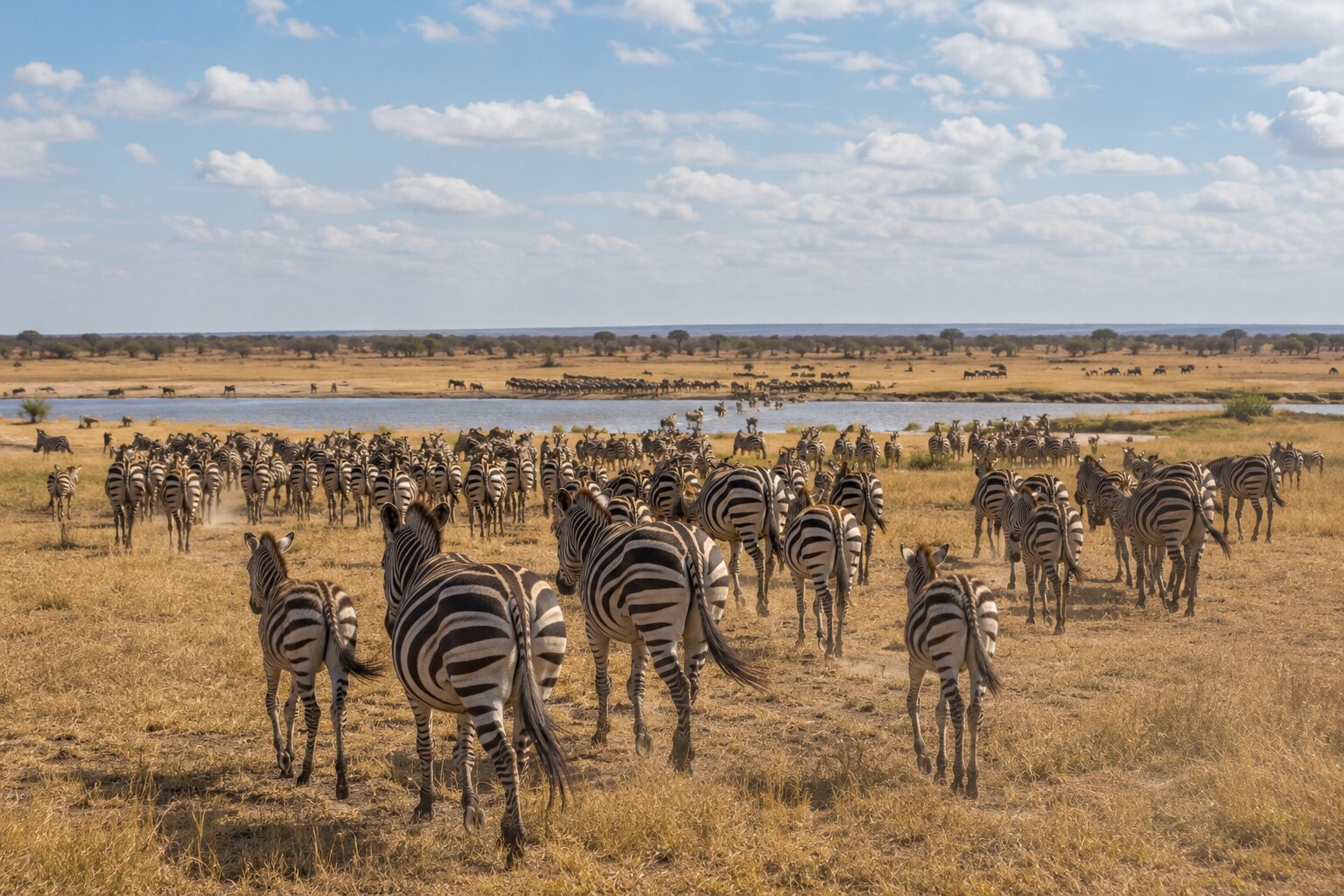
Zebras are mobile grazers that can travel long distances. WWF has documented a roughly 300-mile round-trip plains-zebra migration between Namibia and Botswana, illustrating why connected habitat and cross-border conservation matter.
Conservation status does not settle the ethical question
Even if a particular hunt is legal and biologically sustainable, many people still object to killing a wild animal primarily for recreation or a trophy. That is an animal-welfare judgment rather than a population-level calculation.
A species assessment asks whether a population faces extinction risk. It does not determine the moral value of an individual animal or whether society should accept recreational killing. An animal can belong to a locally common population and still experience fear, stress and pain.
Others argue that rejecting hunting without replacing the revenue or incentives it provides can create unintended consequences for wildlife habitat and rural communities. That concern deserves evidence-based examination rather than slogans.
The strongest conclusion is therefore not that every zebra hunt is illegal or that all zebra populations are on the brink of extinction. It is that “abundant” is an incomplete answer. Responsible policy must consider the exact population, ecological evidence, enforcement, distribution of benefits, animal welfare and the availability of nonlethal ways to fund conservation.
For people who believe wild animals should not be killed for entertainment, the ethical line remains clear: conservation should protect zebras as living parts of functioning ecosystems, not value them mainly as trophies.
Sources
- IUCN SSC Equid Specialist Group: zebra conservation status
- World Land Trust: plains zebra population and trend
- South African National Biodiversity Institute: plains zebra assessment
- CITES: current appendices and international trade controls
- WWF: the KAZA plains-zebra migration
- IUCN discussion: trophy hunting, conservation and community benefits
